
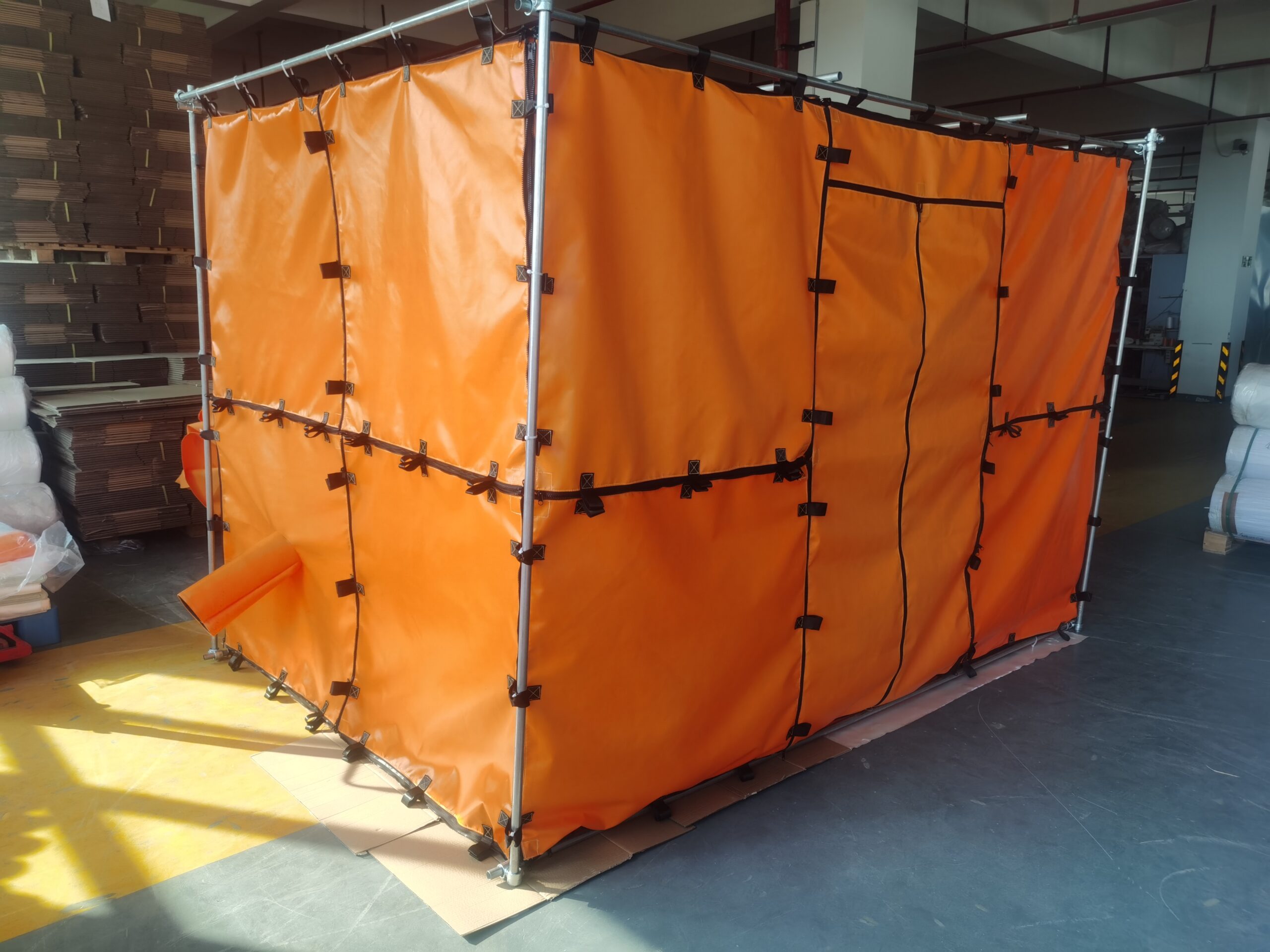
In high-risk industrial environments such as offshore platforms, shipyards, refineries, and construction sites, safety during hot work operations is critical. Welding habitat materials play a vital role in creating controlled, fire-safe enclosures that protect workers, equipment, and surrounding structures.
This guide explores the most common welding habitat materials, their properties, and how to choose the best fire-resistant and heat-resistant solutions for your project.
What Are Welding Habitat Materials?
Welding habitat materials refer to specialized fire-resistant fabrics, flame-retardant textiles, and thermal insulation materials used to construct temporary or permanent enclosures for welding and cutting operations.
These materials are designed to:
- Contain sparks and molten metal
- Resist high temperatures and flames
- Prevent fire spread
- Provide thermal insulation
- Enhance workplace safety compliance
Key Types of Welding Habitat Materials
1. Fiberglass Fabric
Fiberglass fabric is one of the most widely used welding habitat materials. Known for its excellent heat resistance and fireproof properties, it can withstand temperatures up to 550°C (1022°F).
Related terms: glass fiber cloth, fireproof fiberglass, heat-resistant fabric
- Lightweight and durable
- Non-combustible material
- Cost-effective solution
2. Silicone-Coated Fiberglass
Silicone-coated fiberglass enhances basic fiberglass with additional abrasion resistance, waterproofing, and chemical resistance.
Similar keywords: silicone fire blanket, coated fiberglass fabric, waterproof fire-resistant cloth
- Improved durability in harsh environments
- Better flexibility and longer lifespan
- Ideal for outdoor welding habitats
3. PTFE-Coated Fabrics
PTFE (polytetrafluoroethylene) coated fabrics offer superior non-stick properties and extreme temperature resistance.
Related phrases: PTFE fireproof fabric, high-temperature coated cloth, non-stick heat resistant material
- Excellent chemical resistance
- High performance under extreme heat
- Easy to clean and maintain
4. Ceramic Fiber Materials
Ceramic fiber fabrics provide exceptional thermal insulation and can withstand temperatures above 1000°C (1832°F).
Synonyms: ceramic cloth, high-temperature insulation fabric, refractory textile
- Extremely high heat resistance
- Low thermal conductivity
- Ideal for extreme industrial conditions
5. Fire Retardant Tarpaulins
Fire retardant tarps are commonly used for large welding enclosures and habitat walls.
Related keywords: flame retardant tarp, fireproof tarpaulin, welding curtain material
- Flexible and easy to install
- Suitable for temporary structures
- Provides large-area protection
Important Features to Consider
When selecting welding habitat materials, it is essential to evaluate the following properties:
- Temperature resistance: Ability to withstand continuous and peak heat
- Flame retardancy: Compliance with fire safety standards
- Durability: Resistance to wear, tear, and harsh environments
- Flexibility: Ease of installation and handling
- Chemical resistance: Protection against oils, fuels, and corrosive substances
Applications of Welding Habitat Materials
Welding habitat materials are widely used across various industries:
- Offshore oil and gas platforms
- Shipbuilding and marine repair
- Power plants and refineries
- Construction and infrastructure projects
- Industrial maintenance and repair work
Why High-Quality Materials Matter
Using high-quality welding habitat materials is not just about compliance—it directly impacts safety, efficiency, and cost savings. Poor-quality materials may fail under extreme conditions, increasing the risk of fire hazards and operational downtime.
Investing in certified fireproof fabrics, heat-resistant blankets, and flame-retardant enclosures ensures long-term reliability and protection.
Conclusion
Welding habitat materials are essential for creating safe and controlled environments for hot work operations. From fiberglass fabrics to advanced coated materials, choosing the right combination of fire-resistant, heat-resistant, and durable materials can significantly enhance workplace safety.
If you are looking to improve your welding safety solutions, selecting the right welding habitat materials is the first step toward a safer and more efficient operation.