
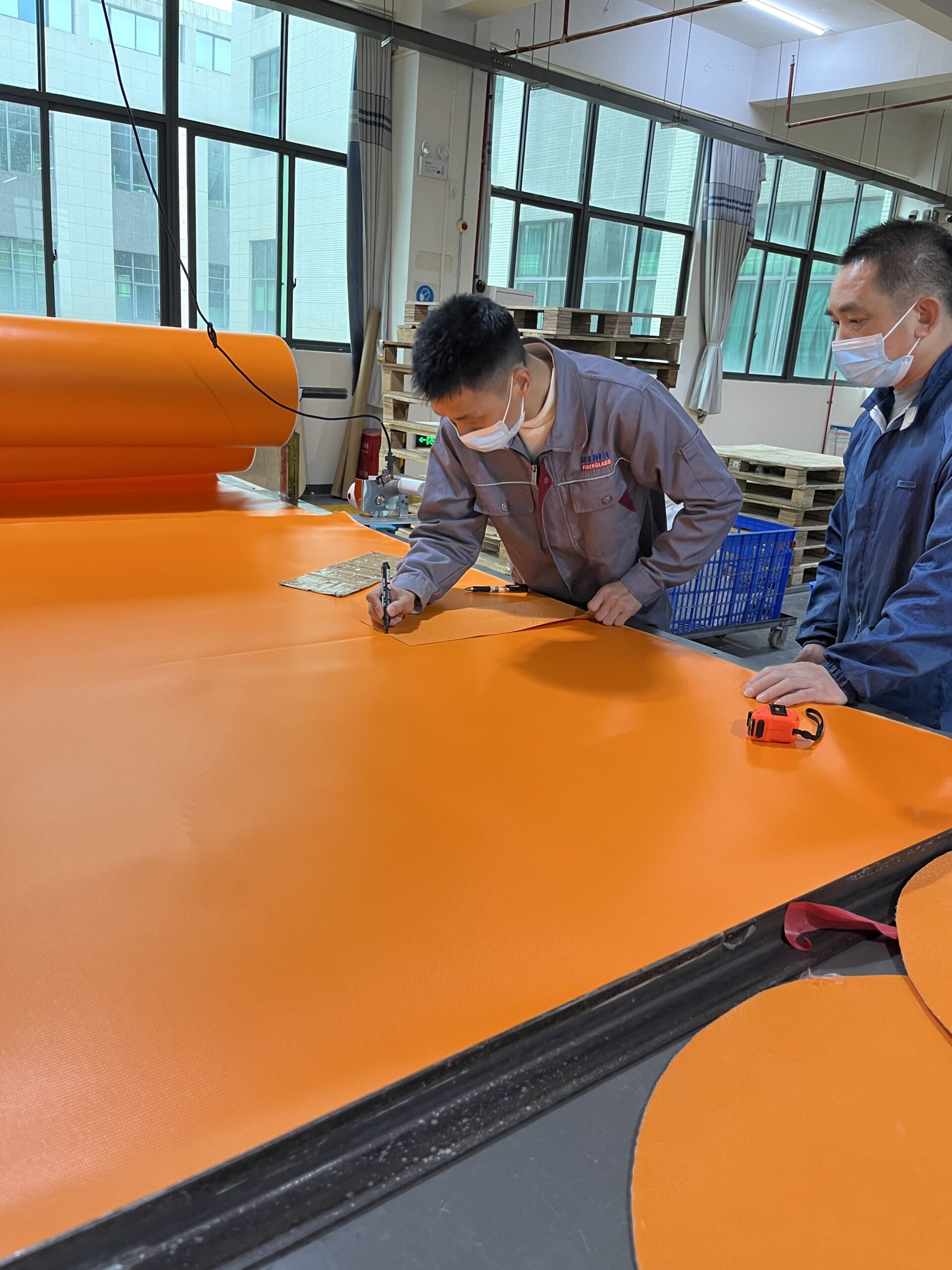
In industrial hot work environments, safety is not only about welding quality. It is also about controlling sparks, heat, flame exposure, fumes and potential hazards around the work area. This is why many welding habitat systems use silicone coated fiberglass fabric as a flexible panel material.
A welding habitat system is commonly used in oil and gas, shipyards, offshore platforms, refineries, chemical plants and other industrial sites where welding, cutting, grinding or other hot work must be performed in a controlled area. The panel material plays an important role in fire protection, heat insulation, enclosure stability and site safety.
Among different flexible materials, silicone coated fiberglass fabric is widely selected for welding habitat panels because it combines fiberglass strength with silicone coating protection.
What Is Silicone Coated Fiberglass Fabric?
Silicone coated fiberglass fabric is made by applying silicone rubber coating onto fiberglass base cloth. The fiberglass fabric provides strength, dimensional stability and high temperature resistance, while the silicone coating improves surface protection, flame resistance, abrasion resistance and resistance to sparks or hot particles.
This material is commonly used in:
- Welding habitat panels
- Welding curtains and blankets
- Fire resistant barriers
- Removable insulation covers
- Expansion joints
- Industrial heat protection systems
For welding habitat systems, the material is usually processed into flexible panels, curtains or enclosure covers. These panels can be connected with frames, zippers, Velcro, transparent windows or other sealing components according to project requirements.
Why Welding Habitat Panels Need Fire Resistant Materials
Welding and hot work can create sparks, welding spatter, high surface temperatures and open flame risks. In some industrial sites, nearby equipment, pipelines, cables, coatings or combustible materials may increase the safety risk.
A welding habitat panel should help:
- Control sparks and welding spatter
- Separate the hot work area from the surrounding environment
- Reduce direct heat exposure
- Support a safer working enclosure
- Improve temporary site safety management
- Work with ventilation or positive pressure systems
This is why ordinary fabric is not suitable for welding habitat panels. The material must be strong, flexible, heat resistant and flame resistant.
| Size | 1m*1m or customized |
| Thickness | 0.4-0.7(±0.05)mm or customized |
| Packing | Plastic bag + Carton box |
| Weight | 500(±10)gsm or customized |
| Temperature Resistance | 550°C |
| Application | Offshore Oil and Gas, Petrochemical, Refinery, Floating, Production, Storage and Offloading etc. |
| Material | 100% Fiberglass Fabric + Silicon |
| Color | Orange or customized |
Key Benefits of Silicone Coated Fiberglass Fabric in Welding Habitat Panels
1. Excellent Fire and Heat Resistance
One of the biggest reasons for using silicone coated fiberglass fabric is its strong resistance to heat and flame exposure.
The fiberglass base cloth can withstand high temperatures, while the silicone coating provides additional surface protection. This makes the material suitable for welding sparks, hot particles and radiant heat commonly found in hot work environments.
For welding habitat panels, this helps improve the fire safety performance of the enclosure and reduces the risk of damage caused by welding spatter.
2. Strong Protection Against Welding Sparks and Spatter
Welding sparks and molten metal particles can damage many common fabrics. Silicone coated fiberglass fabric provides a protective surface that helps resist sparks, spatter and short-term heat exposure.
This makes it suitable for applications such as:
- Welding habitat wall panels
- Temporary welding enclosures
- Hot work protection curtains
- Fire resistant welding screens
- Industrial maintenance areas
For HSE managers and project contractors, this protection is important because the panel material directly affects worksite safety.
3. Flexible and Easy to Install
Compared with rigid metal panels, silicone coated fiberglass fabric is flexible and easier to handle. It can be folded, cut, sewn and customized into different panel sizes.
This is especially useful for portable welding habitat systems, where the enclosure may need to be installed, removed or relocated frequently.
Flexible fabric panels help reduce installation time and improve project efficiency. They can also be designed with:
- Zippers
- Velcro edges
- Reinforced seams
- Observation windows
- Custom openings
- Logo printing
- Different colors and thicknesses
This makes silicone coated fiberglass fabric suitable for customized welding habitat projects.
4. Good Strength and Dimensional Stability
Fiberglass fabric has good tensile strength and dimensional stability. After silicone coating, the material becomes stronger and more suitable for repeated handling in industrial environments.
For welding habitat panels, this means the fabric can help maintain enclosure shape and performance during installation and use.
A stable panel material is important because poor-quality fabric may deform, tear or lose its protective function after repeated use.
5. Resistance to Oil, Moisture and Industrial Conditions
Welding habitat systems are often used in tough environments such as offshore platforms, refineries, shipyards and chemical plants. The panel material may be exposed to moisture, oil, dust and industrial contamination.
Silicone coated fiberglass fabric has good resistance to many industrial conditions. Its coated surface is easier to clean than untreated fiberglass cloth and can provide better durability in demanding work areas.
This makes it a practical choice for temporary or reusable welding habitat panels.
6. Suitable for Custom Welding Habitat Systems
Different welding habitat projects may require different panel specifications. For example, some projects need thicker fabric, higher fire resistance, special colors, reinforced edges or specific connection methods.
Silicone coated fiberglass fabric can be customized according to the application, including:
- Fabric thickness
- Coating weight
- Width and length
- Color options
- Single-side or double-side coating
- Panel size
- Seaming method
- Window and zipper design
- Logo and packaging
This flexibility makes it easier for manufacturers to produce welding habitat panels according to engineering and safety requirements.
Silicone Coated Fiberglass Fabric Is Not the Whole Welding Habitat System
Although silicone coated fiberglass fabric is an important panel material, it is not the only part of a welding habitat system.
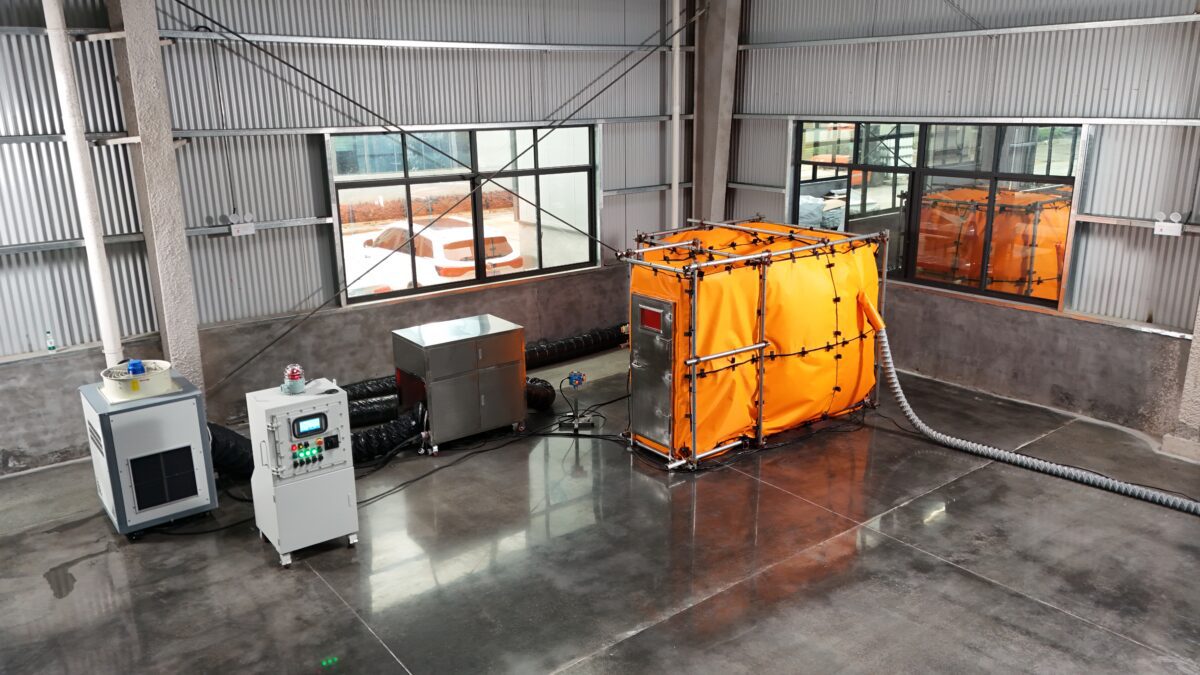
A complete welding habitat system may also include:
- Metal frame structure
- Flexible fire resistant panels
- Sealing components
- Positive pressure system
- Ventilation equipment
- Gas detection system
- Pressure monitoring system
- Explosion-proof electrical components
- Safety control devices
For example, in a positive pressure welding habitat system, the fabric panel provides fire resistant enclosure protection, but the full system performance also depends on airflow, sealing, pressure control and safety monitoring.
Therefore, it is more accurate to say:
Silicone coated fiberglass fabric is used as a fire resistant flexible panel material for welding habitat systems, but the complete safety performance depends on the full system design.
Applications of Silicone Coated Fiberglass Welding Habitat Panels
Silicone coated fiberglass fabric panels can be used in many hot work environments, including:
Oil and Gas Facilities
In oil and gas plants, welding habitat systems are often used for maintenance, repair and hot work control. Fire resistant panels help separate the welding area from surrounding equipment.
Offshore Platforms
Offshore environments require materials that are durable, flexible and suitable for demanding working conditions. Silicone coated fiberglass panels are suitable for portable welding habitats used in offshore maintenance work.
Shipyards and Marine Engineering
Ship repair and marine construction often involve welding and cutting in confined or complex areas. Flexible welding habitat panels can help create safer temporary work zones.
Chemical Plants and Refineries
In high-risk industrial sites, welding habitat panels must support hot work safety management. Fire resistant silicone coated fiberglass fabric is a practical material choice for enclosure systems.
Industrial Maintenance Projects
For general industrial maintenance, flexible welding habitat panels can help protect workers, equipment and nearby work areas from sparks and heat exposure.
How to Choose Silicone Coated Fiberglass Fabric for Welding Habitat Panels
When selecting silicone coated fiberglass fabric for welding habitat panels, buyers should consider several key factors:
Temperature Resistance
The fabric should match the heat exposure level of the working environment. Different fiberglass base cloth and silicone coating structures may provide different heat resistance performance.
Fabric Weight and Thickness
Heavier and thicker fabrics usually provide stronger protection, but they may also be less flexible. The right choice depends on the project design and installation method.
Coating Type
Single-side and double-side silicone coating options are available. Double-side coated fabric may provide better surface protection and durability for demanding applications.
Tear Strength and Seam Strength
For welding habitat panels, seam strength is very important. A good fabric must work together with proper sewing, reinforcement and edge design.
Custom Processing Ability
A reliable manufacturer should be able to provide custom panel sizes, reinforced edges, zippers, Velcro, windows and packaging according to project requirements.
| Model | Thickness MM |
Gram Weight g |
Color | Recommended Use |
|---|---|---|---|---|
| HR-1001 | 0.2 | 280 | White | Nano-calcium silicate insulation bag, rubber-plastic insulation board veneer |
| HR-1002 | 0.40 | 510 | Silver Gray | Removable insulation cover, insulation quilt |
| HR-1003 | 0.42 | 570 | Silver Gray | Removable insulation cover, electric welding fireproof cloth, and fireproof soft connection |
| HR-1004 | 0.42 | 570 | Iron Oxide Red | Removable insulation cover, fireproof connection, electric welding fireproof cloth |
| HR-1005 | 0.42 | 510 | Lemon Yellow | Color fire blanket |
| HR-1006 | 0.8 | 960 | Iron Oxide Red | Ventilation pipe soft connection cloth |
| HR-1007 | 1.0 | 1100 | Iron Oxide Red | Ventilation pipe soft connection cloth, electric welding fireproof cloth |
| HR-1008 | 0.42 | 530 | Silver Gray | Fire curtain |
Why Work With a Professional Fiberglass Fabric Manufacturer?
For welding habitat panel production, material quality and processing ability are both important. A professional fiberglass fabric manufacturer can help buyers control quality from base cloth to coating and final panel processing.
Jiangxi Huarui Tiancheng Composite Materials Co., Ltd. focuses on fiberglass composite materials and industrial fire protection products. With coating equipment, fiberglass fabric production experience and customization capability, the company can support bulk orders and project-based welding habitat panel requirements.
We can provide customized silicone coated fiberglass fabric solutions for welding habitat systems, including different thicknesses, colors, coating weights, panel sizes and processing options.
Conclusion
Silicone coated fiberglass fabric is used in welding habitat panels because it offers a strong combination of fire resistance, heat protection, spark resistance, flexibility and customization.
For welding habitat systems, the panel material must help protect the hot work area while supporting fast installation and industrial durability. Silicone coated fiberglass fabric meets these requirements better than many ordinary flexible materials.
However, for complete welding habitat safety, buyers should consider not only the fabric panel but also the full system design, including frame structure, sealing, ventilation, pressure control and safety monitoring.
If you are looking for custom silicone coated fiberglass fabric panels for welding habitat systems, Huarui can provide material selection, size customization and bulk production support for industrial safety projects.