
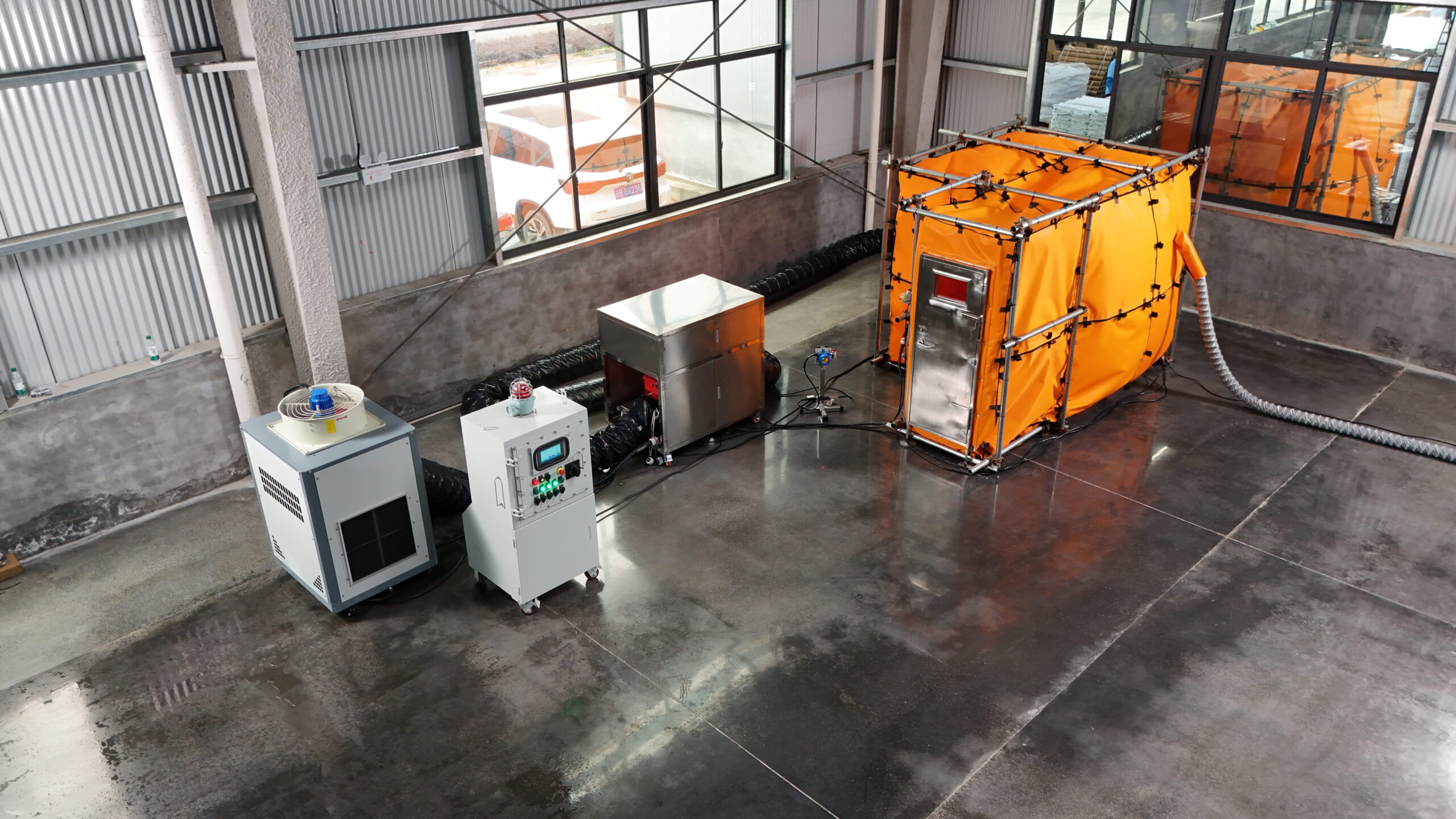
A pressurized welding habitat system is used to create a controlled hot-work area in offshore platforms, FPSOs, refineries, petrochemical plants and other oil & gas facilities.
For procurement teams, choosing the right system is not only about enclosure size or price. The complete configuration, hazardous-area requirements, monitoring system and technical documentation should all be reviewed before placing an order.
1. Define the Application First
Before requesting a quotation, buyers should confirm:
- Offshore or onshore application
- Indoor or outdoor installation
- Habitat size
- Zone 1, Zone 2 or non-hazardous area
- Type of hot work
- Number of doors
- Pipe, cable or hose penetrations
For example, a 3 × 3 × 3 m habitat used on an FPSO may require a very different configuration from the same size enclosure used in a normal workshop.
2. Confirm the Complete System Scope
A complete pressurized welding habitat system may include:
- Fire-resistant habitat panels
- Explosion-proof blower
- Flexible air duct
- PLC control panel
- Differential pressure monitoring
- Gas detection
- Temperature monitoring
- Audible and visual alarms
- Emergency stop
- Hazardous-area lighting
Buyers should clearly state whether they need panels only or a complete system.
This prevents major price differences caused by different scopes of supply.
3. Check Hazardous-Area Requirements
For oil & gas projects, buyers should not simply ask:
“Is the welding habitat ATEX certified?”
Instead, check which individual components are certified.
Important items may include:
- Explosion-proof blower
- Gas detector
- Lighting
- Electrical control components
For Zone 1 or Zone 2 projects, suppliers should provide the relevant ATEX or IECEx certificates where required.
4. Check the Habitat Panel Specification
The enclosure material should be clearly specified.
Buyers should request:
- Base fabric
- Coating material
- Fabric weight
- Thickness
- Continuous temperature rating
- Peak temperature rating
- Fire-performance test reports
Also confirm the panel connection method, such as flame-resistant zippers, hook-and-loop closures and reinforced fixing points.
5. Confirm Ventilation and Positive Pressure
The blower should be selected according to the habitat volume and project requirements.
Procurement should confirm:
- Airflow capacity
- Static pressure
- Motor power
- Voltage and frequency
- Duct size
- Hazardous-area rating
The system should also monitor the pressure difference between the inside and outside of the habitat.
If pressure drops below the required level, the system should provide an alarm or other predefined response.
6. Define Gas Detection and Control Functions
Depending on the project, gas detection may monitor:
- Combustible gas
- LEL
- Oxygen
- H₂S
The detector can be connected to the PLC control system together with pressure and temperature monitoring.
Buyers should confirm:
- Gas type
- Detector quantity
- Alarm setpoints
- PLC integration
- Emergency shutdown logic
The final configuration should follow the end user’s HSE requirements.
7. Request Technical Drawings Before Production
For customized systems, buyers should review the layout before manufacturing.
The drawing should show:
- Overall dimensions
- Door location
- Blower inlet
- Penetration panels
- Cable openings
- Sensor positions
- Control panel location
This can reduce modification risks during installation.
8. Documents Buyers Should Request
A professional welding habitat supplier should normally provide:
- TDS
- Equipment datasheets
- System component list
- Panel fire-performance reports
- ATEX or IECEx certificates where applicable
- Technical drawings
- Operation manual
- Packing list
- Warranty information
These documents are important for technical review and project approval.
Welding Habitat RFQ Checklist
To receive an accurate quotation, buyers should provide:
- Habitat dimensions
- Quantity
- Application
- Offshore or onshore location
- Zone 1 / Zone 2 requirement
- Door quantity and size
- Penetration requirements
- Electrical supply
- Gas detection requirements
- Required certificates
- Delivery location
Conclusion
Purchasing a pressurized welding habitat system should be treated as a complete engineering package rather than simply buying a fire-resistant enclosure.
The key points are:
Application + Hazardous Area + Enclosure + Ventilation + Monitoring + Control System + Documentation
A clear specification helps buyers compare suppliers more accurately and reduces technical changes after production.
HUARUI provides both welding habitat panel packages and complete pressurized welding habitat systems for offshore, oil & gas, petrochemical and industrial maintenance applications.
For project evaluation, buyers can provide the required size, hazardous-area classification, system scope and installation conditions to receive a suitable technical proposal.