
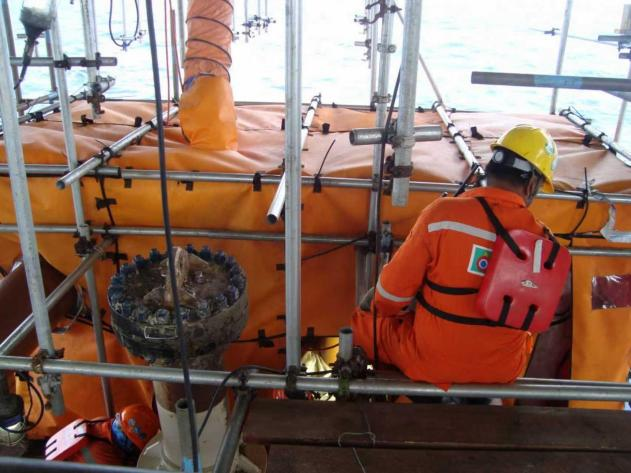
Introduction
Offshore platforms are among the most demanding industrial worksites in the world. They combine confined spaces, flammable materials, harsh marine weather, heavy equipment, and continuous maintenance operations. For oil and gas platforms, FPSOs, drilling rigs, and offshore construction sites, hot work such as welding, cutting, grinding, and repair work is often unavoidable.
However, every spark in an offshore environment can become a serious safety risk.
Recent offshore and energy-sector incidents show why hot work safety should never depend only on procedures or worker experience. It requires a controlled work area, reliable fireproof materials, and a properly designed welding habitat system.
A fireproof welding habitat system provides a temporary enclosure for welding and hot work operations. It helps contain sparks, isolate heat, control the work zone, and reduce the risk of fire spreading to surrounding equipment or hazardous areas.
Recent Offshore Safety News Shows the Risk Is Real
In May 2026, the UK Health and Safety Executive reported that Ensco Offshore UK Limited was fined after a worker died on the Valaris 121 offshore installation in the North Sea. The worker fell through a missing deck grate during offshore operations. Although the case was not a welding fire accident, it clearly shows the serious consequences of safety control failures on offshore installations. The HSE investigation emphasized that the incident could have been prevented through basic safety measures and proper inspection.
Another serious offshore incident occurred in March 2024, when a fire broke out on Perenco’s Becuna oil platform offshore Gabon during a workover operation. Reuters reported that five people died and one person was missing after the platform fire. The fire was later extinguished and the site was secured, but the incident became one of the most serious offshore accidents in Gabon’s oil industry.
These incidents highlight a key point for HSE managers, offshore contractors, and project managers: offshore work areas leave little room for error. When hot work is performed in a high-risk environment, safety planning must include not only permits and supervision, but also physical protection systems.
Why Hot Work Is Especially Dangerous on Offshore Platforms
Hot work includes welding, cutting, grinding, brazing, and other operations that generate heat, flames, or sparks. On offshore platforms, these activities are more dangerous because many surrounding systems may involve hydrocarbons, gas lines, fuel storage, coatings, insulation materials, cables, and confined workspaces.
The U.S. Chemical Safety Board has repeatedly warned that welding, cutting, grinding, and other hot work around flammable materials can cause fires and explosions. Its hot work safety materials focus on the danger of flammable vapor ignition during welding and cutting activities.
The CSB also states that welding and cutting on or near flammable storage tanks caused fires and explosions that led to more than 60 deaths.
For offshore platforms, the risks are even more complex because emergency response is limited by distance from shore, weather conditions, evacuation challenges, and restricted working space.
What Is a Fireproof Welding Habitat System?
A fireproof welding habitat system is a temporary or semi-permanent enclosure used to create a safer hot work zone. It is commonly used on offshore platforms, oil and gas facilities, shipyards, refineries, and petrochemical plants.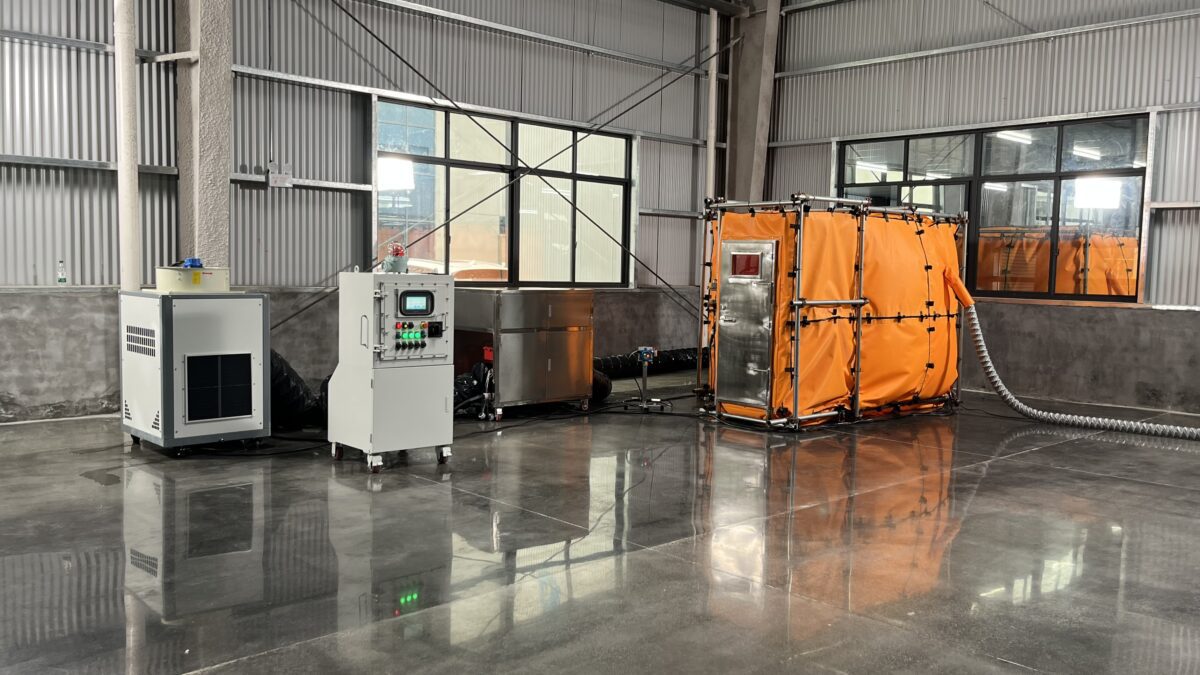
A typical welding habitat system may include:
- Fireproof wall panels or curtains
- Silicone coated fiberglass fabric panels
- Flame-resistant roof or top covers
- Modular metal frames
- Viewing windows
- Ventilation or pressurization options
- Ground sealing and spark containment design
- Access doors and emergency exits
For offshore hot work, the main purpose is not only to block sparks. A proper welding habitat helps create a controlled environment where ignition sources, heat, smoke, and welding spatter can be better managed.
Why Offshore Platforms Need Welding Habitat Systems
1. To Contain Welding Sparks and Hot Particles
Welding sparks can travel farther than expected, especially in open or windy offshore environments. A fireproof welding habitat helps keep sparks and molten metal particles inside the controlled work area.
This is especially important when hot work is performed near cables, painted steel structures, insulation materials, pipe racks, machinery, or temporary storage areas.
2. To Separate Hot Work from Hazardous Areas
Offshore platforms often have classified or restricted zones where flammable gases or vapors may be present. A welding habitat creates a physical barrier between the hot work activity and the surrounding environment.
The UK HSE’s permit-to-work guidance notes that welding in potentially flammable areas should be planned and controlled through a work permit system. It also refers to the need for fire precautions when ignition sources such as welding, cutting, or grinding are introduced.
A welding habitat supports this permit system by adding a practical engineering control, not just an administrative control.
3. To Improve HSE Compliance
For HSE managers, offshore safety is not only about responding to incidents. It is about preventing them through layered protection.
A welding habitat system helps support:
- Hot work permits
- Fire watch requirements
- Spark containment
- Work area isolation
- Contractor safety control
- Emergency preparedness
- Site-specific risk assessment
This makes it easier for offshore operators and EPC contractors to show that hot work risks are being actively controlled.
4. To Protect Workers in Confined and High-Risk Areas
Offshore maintenance work is often performed in narrow spaces, on decks, near pipes, or close to machinery. Without a controlled enclosure, welders and nearby workers may be exposed to sparks, radiant heat, smoke, and accidental contact with hot materials.
A fireproof welding habitat provides a safer work boundary and helps separate the welder, fire watch team, and nearby personnel.
5. To Reduce Production Downtime Risk
A fire incident on an offshore platform can cause emergency shutdown, evacuation, investigation, production loss, repair costs, and reputational damage.
Even outside offshore platforms, recent energy-sector incidents show how fire and explosion events can disrupt operations. Reuters reported in March 2026 that a fluid release caused an explosion and fire at Valero’s Port Arthur refinery in Texas, forcing a temporary shutdown of the refinery.
For offshore assets, downtime can be even more expensive due to marine logistics, limited access, and complex restart procedures.
Why Silicone Coated Fiberglass Fabric Is Used in Welding Habitats
Silicone coated fiberglass fabric is widely used for fireproof welding habitat panels because it combines heat resistance, flexibility, flame resistance, and durability.
For offshore welding habitat systems, this material offers several advantages:
Heat and Spark Resistance
Fiberglass fabric provides strong thermal stability, while the silicone coating improves surface protection and resistance to welding sparks, heat exposure, and flame contact.
Flexible and Easy to Install
Compared with rigid fireproof boards, silicone coated fiberglass fabric can be sewn, reinforced, folded, and installed as modular panels. This makes it suitable for temporary offshore projects and maintenance work.
Weather and Moisture Resistance
Offshore environments involve salt spray, humidity, wind, and changing temperatures. Silicone coated fiberglass fabric offers better resistance to moisture and surface contamination than untreated fiberglass cloth.
Customizable for Project Requirements
Welding habitat panels can be customized by size, thickness, color, window design, edge reinforcement, hook-and-loop systems, grommets, and frame connection methods.
This is important for offshore projects where each work area may have different dimensions and safety requirements.
Key Features to Look for in an Offshore Welding Habitat System
When selecting a fireproof welding habitat system for offshore hot work safety, buyers should focus on the following points:
1. Fireproof and Heat-Resistant Materials
The panel material should be designed for welding sparks, radiant heat, and industrial fire protection. Silicone coated fiberglass fabric is a common choice for this application.
2. Modular Structure
Offshore projects often need fast installation and removal. A modular welding habitat system allows workers to build a controlled hot work area around pipes, valves, decks, or equipment.
3. Strong Sealing and Spark Control
The system should reduce gaps where sparks may escape. Reinforced edges, proper overlap, and secure panel connections are important.
4. Visibility and Access
Clear viewing windows, proper doors, and emergency access points help supervisors and fire watch teams monitor hot work without entering the habitat unnecessarily.
5. Custom Design Capability
Offshore platforms are not standard factory floors. A good supplier should support OEM and project-based customization, including size, fabric grade, frame structure, connection method, and packaging.
Who Needs Fireproof Welding Habitat Systems?
Fireproof welding habitat systems are suitable for:
- Offshore oil and gas platforms
- FPSO maintenance projects
- Jack-up rigs and drilling platforms
- Shipyards and marine repair sites
- LNG and petrochemical facilities
- Refineries and chemical plants
- Pipeline welding and repair projects
- EPC offshore construction projects
The main decision makers usually include:
- HSE Managers
- Project Managers
- Offshore Maintenance Managers
- Welding Supervisors
- EPC Contractors
- Oil and Gas Procurement Teams
Conclusion
Recent offshore safety news shows that offshore platforms remain high-risk industrial environments. From fatal platform fires to serious offshore safety failures, these incidents remind the industry that procedures alone are not enough.
For hot work safety, offshore operators need a layered protection strategy: risk assessment, hot work permits, gas testing, fire watch, emergency planning, and physical isolation.
A fireproof welding habitat system plays an important role in this protection strategy. It helps contain sparks, isolate heat, protect workers, support HSE compliance, and reduce the risk of fire spreading during welding, cutting, and grinding operations.
For offshore platforms, where every safety failure can lead to serious consequences, a reliable welding habitat system is not just an accessory. It is an essential part of responsible hot work management.