

Welding and hot work are not always performed inside a workshop. In many industrial projects, welding, grinding, cutting, and repair work must be carried out outdoors, on platforms, pipelines, ships, construction sites, chemical plants, power plants, and oil and gas facilities. This raises an important question for HSE managers and project teams: can welding habitat systems be used outdoors?
The answer is yes. Welding habitat systems can be used outdoors when they are properly designed, installed, and selected according to the jobsite conditions. For outdoor hot work, the system should provide fire-resistant protection, spark containment, worker isolation, ventilation support, and structural stability.
A well-designed outdoor welding habitat system helps create a controlled hot work area in challenging industrial environments.
Why Outdoor Welding Requires Better Safety Control
Outdoor welding work may look more open than indoor welding, but it still has serious safety risks. Welding sparks, hot metal particles, flame exposure, heat radiation, wind, dust, rain, and nearby combustible materials can all increase the complexity of hot work control.
In many industrial sites, outdoor welding may take place near:
- Pipelines
- Storage tanks
- Process equipment
- Steel structures
- Scaffolding
- Offshore platforms
- Ship decks
- Chemical plant areas
- Power plant facilities
- Maintenance zones
For HSE teams, the main challenge is to control the welding area and prevent sparks or heat from spreading to surrounding workers, equipment, cables, coatings, insulation materials, or flammable objects.
This is why outdoor welding habitat systems are used as temporary or portable safety enclosures for industrial hot work.
What Is an Outdoor Welding Habitat System?
An outdoor welding habitat system is a modular enclosure designed to isolate welding and hot work activities from the surrounding environment. It normally includes a metal frame, fire-resistant fabric panels, access doors, viewing windows, ventilation openings, and connection points for supporting equipment.
The system creates a safer and more controlled welding zone. It helps contain sparks, spatter, and heat while allowing workers to perform welding operations with better site protection.
For outdoor applications, the welding habitat system must be more than a simple welding curtain. It should be stable, durable, easy to install, and suitable for different site conditions.
Key Benefits of Using Welding Habitat Systems Outdoors
1. Fire Risk Control
Outdoor welding can still create fire hazards, especially when sparks travel to nearby equipment, insulation, dry materials, coatings, or process areas. A welding habitat system helps contain welding sparks and hot particles within a defined area.
Fire-resistant panels, such as silicone coated fiberglass fabric panels, provide an important protective barrier for outdoor hot work safety.
For HSE managers, this helps improve fire prevention and supports safer hot work permit management.
2. Protection from Wind and Environmental Interference
Wind can blow welding sparks, spatter, smoke, and shielding gas away from the working area. It may also make welding quality less stable and increase fire risk.
An outdoor welding habitat system helps reduce direct wind influence around the welding area. By creating a semi-enclosed or enclosed working zone, it supports better control of sparks, fumes, and working conditions.
This is especially important for outdoor maintenance, offshore repair, and pipeline welding projects.
3. Worker and Equipment Protection
Outdoor industrial sites are often busy environments. Workers, machines, cables, scaffolding, and nearby equipment may be close to the hot work area.
A welding habitat system helps separate the welding operation from surrounding activities. It reduces the risk of accidental exposure to sparks, heat, arc light, and hot metal particles.
This improves worker protection and helps protect nearby assets from heat and spark damage.
4. Flexible Use for Temporary Maintenance Work
Outdoor welding projects are often temporary. Maintenance teams may need to move from one work area to another, especially during shutdowns, repairs, and inspection projects.
A portable welding habitat system can be assembled, dismantled, relocated, and reused. This flexibility makes it suitable for outdoor industrial maintenance and repair projects.
5. Support for Ventilation and Fume Control
Even outdoors, welding fumes still need attention. In semi-enclosed areas, scaffolding spaces, platforms, or wind-protected zones, smoke and fumes may accumulate around workers.
A welding habitat system can be designed with ventilation openings or fume extraction connections. This helps HSE teams improve air movement and support safer welding conditions.
Important Requirements for Outdoor Welding Habitat Systems
Not every welding enclosure is suitable for outdoor use. Before using a welding habitat system outdoors, HSE managers should check several important factors.
Stable Frame Structure
Outdoor sites may have wind, uneven ground, vibration, or limited installation space. The welding habitat frame should be strong and stable enough for the working environment.
The structure should be properly fixed, supported, or connected according to the site condition.
Fire-Resistant Panel Material
Panel material is critical for welding safety. Outdoor welding habitat panels should resist heat, welding sparks, spatter, and flame exposure.
Silicone coated fiberglass fabric is commonly used because it offers heat resistance, flame resistance, flexibility, and durability for hot work protection.
Weather and Site Condition Consideration
Outdoor use may involve sunlight, rain, dust, wind, temperature changes, and industrial contamination. The welding habitat system should be selected based on the actual environment.
For long-term outdoor use, buyers should discuss weather exposure, installation time, working conditions, and maintenance needs with the supplier.
Proper Ventilation Design
A welding habitat system should not create unsafe air conditions. Ventilation openings or fume extraction support should be considered, especially when workers operate inside an enclosed or semi-enclosed welding area.
Safe Access and Visibility
Outdoor welding habitats should include practical access doors, observation windows, and emergency access considerations. This helps supervisors monitor the work and allows workers to enter and exit safely.
Where Outdoor Welding Habitat Systems Are Used
Outdoor welding habitat systems are suitable for many industrial applications, including:
Oil and Gas Facilities
Outdoor welding habitats are used for pipeline repair, equipment maintenance, structural welding, and facility upgrades in oil and gas sites.
Offshore Platforms
Offshore platforms have strict hot work safety requirements. Welding habitat systems help create controlled work areas for repair and maintenance in exposed marine environments.
Shipyards and Marine Repair
Shipyards often require outdoor welding on decks, hulls, and steel structures. A welding habitat system helps contain sparks and protect nearby work areas.
Chemical Plants
Chemical plants require careful hot work control. Outdoor welding habitats help isolate welding areas during repair, shutdown, and maintenance work.
Power Plants
Power plant maintenance often involves outdoor welding on pipelines, frames, and equipment. Portable welding habitats provide flexible protection for temporary hot work tasks.
Pipeline Construction and Repair
Pipeline welding and repair may take place in open industrial areas. Welding habitats help improve spark control, worker protection, and worksite safety.
Can Welding Habitat Systems Be Used in Rain or Strong Wind?
A welding habitat system can support outdoor work, but rain, strong wind, storms, and extreme weather conditions must be carefully evaluated by the project safety team.
The system should not be used beyond its safe installation and structural limits. HSE managers should assess wind load, ground condition, anchoring method, electrical safety, worker safety, and emergency evacuation before starting outdoor hot work.
For rainy conditions, additional protection and site planning may be required. Electrical welding equipment, cables, ventilation units, and power connections must be managed safely.
In short, welding habitat systems can be used outdoors, but they must be used according to jobsite risk assessment and safety procedures.
Why Choose Huarui for Outdoor Welding Habitat Systems
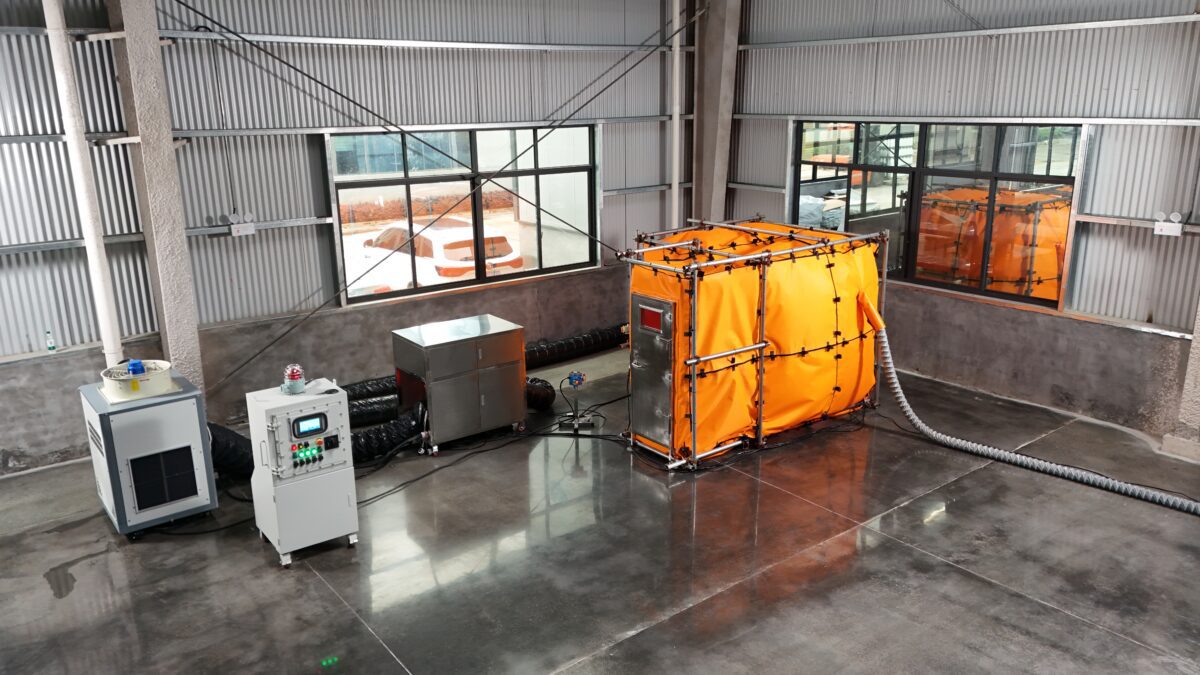
Huarui provides welding habitat systems for industrial hot work safety, maintenance, and repair applications. With experience in fire-resistant fabrics, silicone coated fiberglass materials, welding blankets, and customized safety enclosures, Huarui understands the requirements of outdoor welding protection.
Huarui welding habitat systems can be customized according to project needs, including:
- Custom size
- Custom frame structure
- Custom panel layout
- Custom access door
- Custom viewing window
- Custom ventilation opening
- Custom fabric material
- Custom design for outdoor industrial sites
Key advantages of Huarui welding habitat systems include:
- Fire-resistant silicone coated fiberglass fabric panels
- Spark and spatter containment
- Modular and portable structure
- Suitable for industrial maintenance and repair
- Ventilation and fume extraction compatibility
- Custom solutions for oil and gas, offshore, shipyard, chemical plant, and power plant projects
- Technical document support for project evaluation
- Reliable manufacturing and customization capability
Huarui focuses on helping HSE teams and project managers create safer, more controlled hot work areas in both indoor and outdoor industrial environments.
Conclusion
Can welding habitat systems be used outdoors? Yes, they can. When properly designed and installed, welding habitat systems provide an effective solution for outdoor hot work safety.
They help control sparks, reduce fire risk, protect workers and equipment, support ventilation, and create a safer welding zone in industrial maintenance and repair projects.
For outdoor welding in oil and gas facilities, offshore platforms, shipyards, chemical plants, power plants, and pipeline repair sites, a portable welding habitat system can be a practical and reliable safety solution.
Huarui provides customized welding habitat systems for demanding outdoor and industrial applications, helping customers improve hot work safety and project efficiency.