Pressurized welding habitat systems are becoming an essential safety solution for hot work operations in hazardous industrial environments. As offshore platforms, petrochemical plants, refineries, LNG facilities, shipyards, and energy maintenance projects continue to demand safer and more efficient welding operations, the role of pressurized welding habitats is rapidly expanding.
What Is a Pressurized Welding Habitat System?
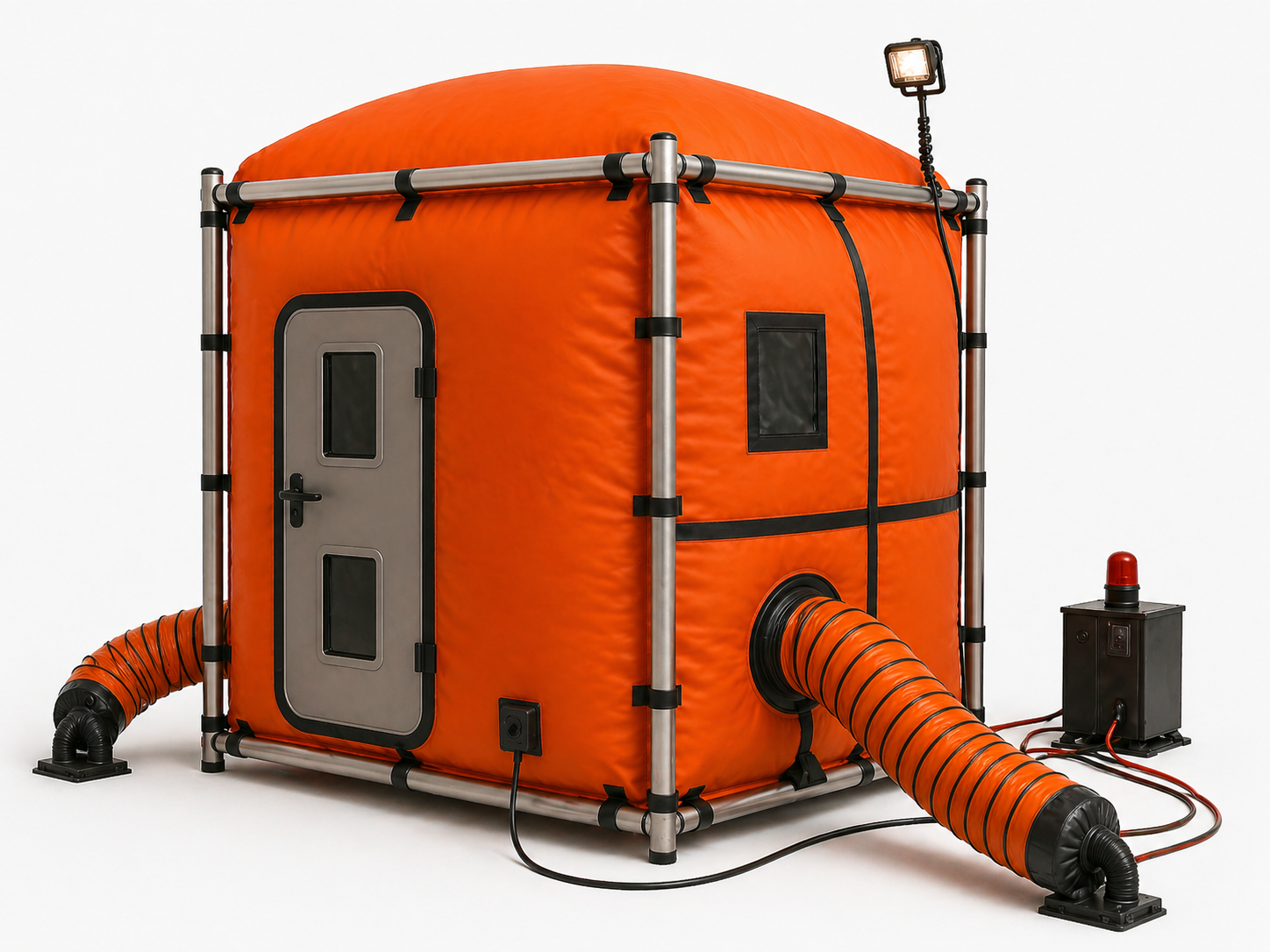
A pressurized welding habitat system is a temporary or modular enclosed workspace designed for welding, cutting, grinding, and other hot work activities in hazardous areas. By maintaining positive air pressure inside the enclosure, the system helps prevent flammable gases, vapors, or dust from entering the working area.
Compared with traditional welding curtains or fire-resistant blankets, a pressurized welding habitat provides a higher level of protection. It usually includes fire-resistant panels, sealed connections, ventilation equipment, gas detection devices, air supply systems, monitoring units, and emergency safety controls. These features make it suitable for high-risk locations such as offshore oil and gas platforms, refineries, chemical plants, LNG facilities, and Zone 1 or Zone 2 hazardous areas.
Development Trend 1: From Simple Fire Protection to Integrated Safety Systems
One of the most important development trends is the shift from simple fire protection to integrated safety control. Modern industrial customers are no longer satisfied with basic welding curtains or fireproof blankets. They need a complete system that can help control multiple risks at the same time.
A modern pressurized welding habitat system may include:
- Positive pressure control
- Gas detection and alarm systems
- Ventilation and air filtration
- Flame-resistant and heat-resistant panels
- Explosion-proof electrical components
- Emergency shutdown functions
- Real-time safety monitoring
- Custom modular structures
This trend shows that buyers are paying more attention to overall system performance instead of only material performance. For manufacturers, product competitiveness now depends not only on fabric quality, but also on engineering capability, system design, certification support, installation convenience, and customization ability.
Development Trend 2: Stronger Demand for ATEX, IECEx, UL, and Safety Compliance
As global industrial safety regulations become stricter, certifications are becoming a key factor in purchasing decisions. In hazardous area applications, international buyers often pay close attention to ATEX, IECEx, UL, SGS, and other third-party certifications.
For oil and gas, petrochemical, offshore, and energy projects, buyers are not simply purchasing an enclosure. They are purchasing a safety solution that must support HSE management, hot work permits, project approval, and site inspection requirements.
A certified pressurized welding habitat system can help customers reduce safety concerns, improve procurement confidence, and simplify project evaluation. For B2B buyers, certification is not just a marketing label. It represents reliability, traceability, and confidence in high-risk working conditions.
Development Trend 3: Modular Design and Customization
Another important trend is modular design and customization. Different job sites have different space limitations, safety standards, environmental conditions, and project schedules. A standard enclosure may not meet every customer’s requirements.
Therefore, modern pressurized welding habitat systems are increasingly designed to be flexible and customizable. Customers may require different sizes, panel materials, panel thicknesses, access doors, observation windows, air supply layouts, ventilation ports, connection methods, and packaging options.
Common application scenarios include:
- Offshore platform maintenance
- Petrochemical plant repair
- Refinery pipeline welding
- LNG facility maintenance
- Shipyard hot work
- Power plant equipment repair
- Offshore wind power maintenance
- Hazardous area equipment modification
This creates strong opportunities for manufacturers with engineering teams and flexible production capacity. A supplier that can provide customized materials, sizes, thicknesses, and complete system support will have a clear advantage in the international market.
Development Trend 4: Reducing Shutdown Time and Project Costs
One of the biggest advantages of a pressurized welding habitat system is its ability to support safer hot work operations while helping customers reduce shutdown time. In industries such as oil and gas, petrochemical processing, offshore energy, and LNG production, downtime can be extremely expensive.
A well-designed pressurized welding habitat helps isolate the hot work area, control the internal atmosphere, reduce fire and explosion risks, and improve maintenance efficiency. In some projects, this can help customers avoid unnecessary full shutdowns, shorten maintenance schedules, and reduce operational losses.
For industrial buyers, the value of the system is not only safety. It is also cost control. If a pressurized welding habitat helps reduce downtime, improve worksite efficiency, and lower project risk, the return on investment can be significant.
Development Trend 5: Wider Applications Beyond Oil and Gas
Traditionally, pressurized welding habitat systems have been strongly associated with offshore oil and gas platforms. However, their application range is now expanding. More industries are recognizing the importance of controlled hot work environments.
In addition to oil and gas facilities, pressurized welding habitats are increasingly relevant for chemical plants, LNG terminals, shipyards, mining facilities, power plants, offshore wind projects, and large industrial maintenance sites.
This wider application trend creates new market opportunities. Suppliers can position pressurized welding habitat systems not only for traditional oil and gas projects, but also for broader industrial safety, renewable energy maintenance, and hazardous area engineering applications.
Why Pressurized Welding Habitat Systems Are Important
Pressurized welding habitat systems are important because they solve several major safety and efficiency challenges in hazardous industrial environments.
1. Reducing Fire and Explosion Risks
Welding, cutting, and grinding can generate sparks, hot particles, and high temperatures. In areas where flammable gases or vapors may exist, these ignition sources can create serious fire and explosion risks. A pressurized welding habitat helps isolate the hot work area and prevent hazardous gases from entering the enclosure.
2. Improving Worker Safety
Workers need a controlled and protected environment when performing hot work in complex industrial sites. A properly designed pressurized welding habitat can help protect workers from sparks, heat, fumes, and external hazardous conditions.
3. Supporting HSE Compliance
Many industrial projects require strict safety procedures before hot work can begin. A certified pressurized welding habitat system can help customers meet HSE requirements, support hot work permit management, and pass project inspections more smoothly.
4. Improving Project Efficiency
By creating a safer temporary workspace, companies can reduce delays, improve maintenance efficiency, and complete welding or repair work more quickly. This is especially important for offshore platforms, refineries, LNG plants, and petrochemical facilities where every hour of downtime can be costly.
5. Providing Flexible Protection for Different Job Sites
Modular and customizable systems can be adapted to different working spaces, equipment layouts, and project conditions. This flexibility allows customers to use pressurized welding habitats in a wide range of industrial applications.
Conclusion
The pressurized welding habitat system is becoming a critical product in modern industrial safety. Its development trend is clear: from simple fire protection to integrated, certified, modular, customizable, and high-efficiency safety systems.
For offshore platforms, refineries, petrochemical plants, LNG facilities, shipyards, power plants, and energy maintenance projects, pressurized welding habitats provide strong value by improving hot work safety, reducing fire and explosion risks, supporting HSE compliance, and helping customers control downtime.
For manufacturers, future competition will not only depend on material quality. It will depend on complete system capability, certification strength, engineering support, customization ability, production capacity, and fast service response.
As global industries continue to focus on safety, efficiency, and compliance, pressurized welding habitat systems will play an increasingly important role in hazardous area hot work operations.
Our company is a leading supplier of welding habitat systems with over a decade of experience and various international certifications. Please feel free to contact us.