
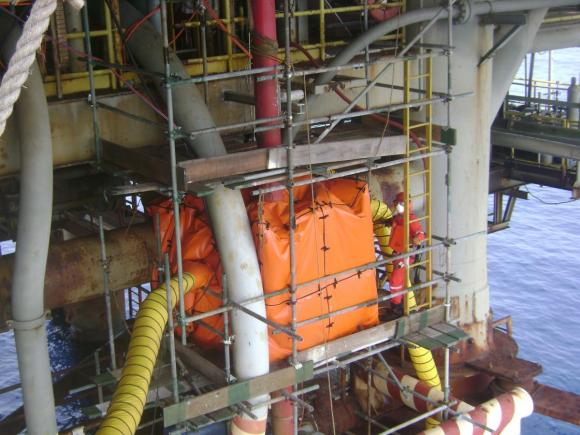
When it comes to welding safety, choosing the right enclosure can make a significant difference in both operational efficiency and risk control. Two commonly used solutions are welding habitats and welding tents. While they may seem similar at first glance, they serve very different purposes and are designed for different working environments.
In this complete guide, we will break down the differences between welding habitat systems and welding tents, compare their features, and help you determine which solution is best for your project.
What is a Welding Habitat System?
A welding habitat system is a fully enclosed, fire-resistant structure designed for hot work in hazardous environments such as offshore oil platforms, refineries, and chemical plants. It is engineered to prevent fire risks, contain sparks, and comply with strict industrial safety standards.
Learn more: What is a Welding Habitat System?
- Designed for high-risk industrial environments
- Made from fire-resistant materials like fiberglass
- Includes ventilation and sealing systems
- Often used offshore or in explosive atmospheres
What is a Welding Tent?

A welding tent is a lightweight, portable shelter designed primarily to protect welding operations from weather conditions such as rain, wind, and sunlight. It is commonly used in construction sites and outdoor projects.
- Lightweight and portable
- Quick setup
- Weather protection focus
- Limited fire resistance
Key Differences Between Welding Habitat and Welding Tent
| Feature | Welding Habitat | Welding Tent |
|---|---|---|
| Primary Purpose | Fire and explosion safety | Weather protection |
| Material | Fire-resistant fiberglass | PVC or standard fabric |
| Environment | Hazardous industrial areas | General outdoor use |
| Ventilation | Advanced ventilation systems | Basic or none |
| Compliance | Meets strict safety regulations | Limited compliance |
| Cost | Higher | Lower |
When Should You Use a Welding Habitat?
Welding habitats are essential when working in environments where fire hazards or explosive gases are present. These include:
- Offshore oil and gas platforms
- Shipyards and marine repair
- Refineries and petrochemical plants
- Confined industrial spaces
In these scenarios, safety regulations often require fully enclosed and fire-rated systems, making welding habitats the only viable option.
When is a Welding Tent Enough?
Welding tents are suitable for low-risk environments where the main concern is weather rather than fire safety. Typical applications include:
- Construction sites
- Outdoor repair work
- Temporary welding jobs
However, they should not be used in hazardous environments where fire risks are high.
Advantages of Welding Habitat Systems
- Maximum fire protection
- Compliance with safety standards
- Improved worker safety
- Suitable for hazardous environments
- Customizable design
Advantages of Welding Tents
- Low cost
- Easy to transport
- Quick installation
- Good for weather protection
Common Mistakes When Choosing Between Them
- Choosing a tent for high-risk environments
- Ignoring safety compliance requirements
- Underestimating fire hazards
- Focusing only on cost instead of safety
Cost Comparison: Habitat vs Tent
Welding habitats typically cost more due to their advanced materials and safety features. However, the cost is justified by the level of protection and compliance they provide.
How to Choose the Right Solution
To choose the right option, ask yourself the following questions:
- Is the environment hazardous?
- Are there flammable materials or gases?
- Do you need to meet strict safety regulations?
- Is this a temporary or long-term project?
If safety and compliance are critical, a welding habitat system is the best choice. If the goal is simple weather protection, a welding tent may be sufficient.
Future Trends in Welding Safety Enclosures
As industries move toward stricter safety regulations, welding habitat systems are becoming more advanced. Innovations include:
- Smart monitoring systems
- Improved fire-resistant materials
- Faster modular designs
- Integration with safety sensors
Conclusion
While both welding habitats and welding tents serve important roles, they are not interchangeable. Welding habitats are designed for safety-critical environments, while welding tents are best suited for basic weather protection.
Choosing the wrong solution can lead to serious safety risks, compliance issues, and costly project delays. Understanding the differences is essential for making the right decision.
Related Articles
Need Help Choosing the Right Welding Solution?
We specialize in manufacturing high-performance welding habitat systems for offshore, shipyard, and industrial applications. Our team can help you choose the safest and most cost-effective solution for your project.
- Custom welding habitat design
- Fast global delivery
- Professional technical support