
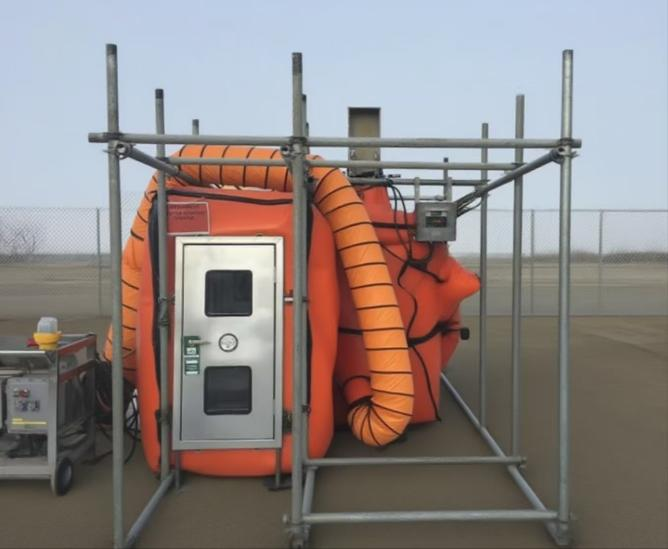
A welding habitat system is a specialized enclosure designed to create a safe and controlled environment for hot work activities such as welding, cutting, and grinding. These systems are essential in hazardous industries where fire risks and explosive atmospheres are present.
In sectors like offshore oil and gas, shipbuilding, and petrochemical processing, even a small spark can lead to severe accidents. Welding habitat systems are engineered to prevent such risks by isolating hot work operations from the surrounding environment.
Why Welding Habitat Systems Are Important
Hot work is one of the leading causes of industrial fires. Without proper containment, sparks and heat can ignite flammable materials or gases.
- Prevents fire and explosion hazards
- Improves worker safety
- Ensures regulatory compliance
- Reduces downtime and operational risks
- Protects surrounding equipment
Where Are Welding Habitat Systems Used?
Welding habitat systems are widely used in safety-critical environments:
- Offshore oil and gas platforms
- Shipyards and marine repair facilities
- Petrochemical and refinery plants
- Power generation facilities
- Heavy industrial manufacturing
Main Components of a Welding Habitat System
1. Fire-Resistant Fabric
The enclosure is typically made from fiberglass fabric coated with silicone or PU. These materials provide excellent heat resistance and prevent flame spread.
2. Structural Frame
A modular frame provides support and allows flexibility for installation in various industrial environments.
3. Ventilation System
Proper ventilation ensures the removal of fumes, smoke, and heat, maintaining a safe working environment.
4. Access Points and Sealing
Entry points are designed with fire-resistant closures to maintain enclosure integrity.
How Does a Welding Habitat System Work?
A welding habitat system works by isolating the hot work area and containing sparks, heat, and fumes. In hazardous environments, it can also include pressurization and forced ventilation systems to prevent the accumulation of explosive gases.
Welding Habitat vs Welding Tent
Welding habitats are often compared to welding tents, but they serve different purposes.
- Welding Habitat: Designed for hazardous environments with strict safety requirements
- Welding Tent: Used for weather protection in low-risk environments
👉 Learn more: Welding Habitat vs Welding Tent
Key Benefits of Welding Habitat Systems
- Enhanced fire safety and containment
- Compliance with industrial standards
- Improved productivity and efficiency
- Customizable design options
- Suitable for extreme environments
Types of Welding Habitat Systems
1. Modular Welding Habitats
Flexible systems that can be adapted to different project requirements.
2. Inflatable Habitats
Lightweight and quick to deploy, suitable for temporary applications.
3. Custom Industrial Enclosures
Tailored solutions for complex environments such as offshore platforms.
How to Choose the Right Welding Habitat System
- Evaluate environmental risks
- Determine required size and layout
- Check compliance standards
- Consider ventilation needs
- Work with experienced manufacturers
Common Mistakes to Avoid
- Using non-certified materials
- Ignoring ventilation requirements
- Choosing incorrect size
- Focusing only on cost instead of safety
Future Trends in Welding Habitat Systems
As industrial safety requirements continue to evolve, welding habitat systems are becoming more advanced:
- Smart monitoring and sensors
- Improved fire-resistant materials
- Faster modular installation
- Integration with digital safety systems
Related Articles
Looking for a Reliable Welding Habitat System Supplier?
We specialize in manufacturing high-quality welding habitat systems for offshore and industrial applications. Our solutions are designed to meet strict safety standards and can be customized to your project requirements.
- Custom sizes and configurations
- Factory direct pricing
- Global delivery support