
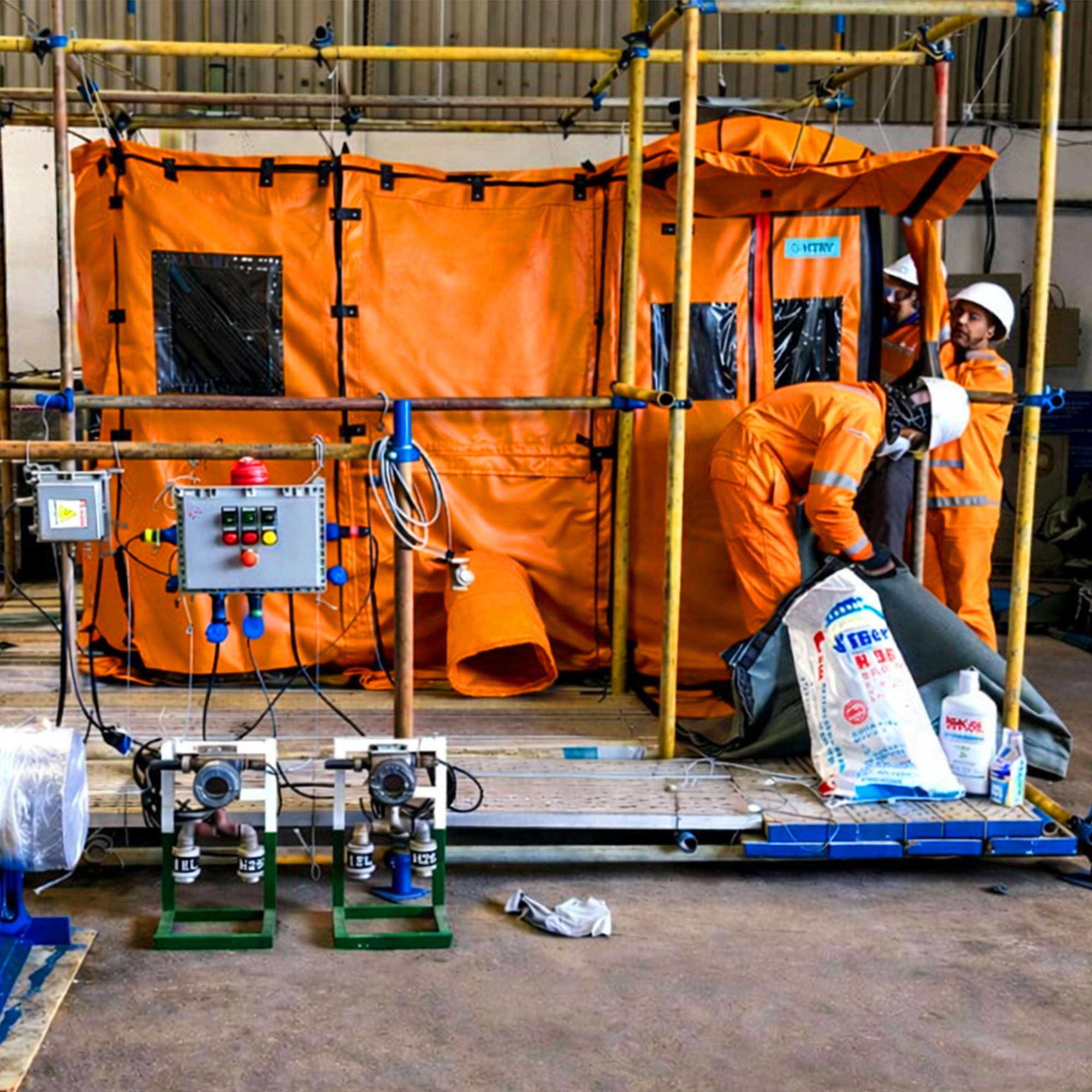
A temporary welding shelter is a portable enclosure designed to protect welding operations from environmental factors such as rain, wind, and sunlight. It is widely used in construction sites, shipyards, and outdoor industrial projects where mobility and quick setup are essential.
In this complete guide, we will explain what a welding shelter is, its types, advantages, limitations, and how it compares to more advanced systems like welding habitat systems.
What is a Temporary Welding Shelter?
A temporary welding shelter is a lightweight, movable structure that provides a basic enclosed workspace for welding. Unlike permanent enclosures, these shelters are designed for short-term use and easy relocation.
- Portable and easy to install
- Provides weather protection
- Suitable for outdoor welding projects
- Cost-effective solution
Types of Temporary Welding Shelters
1. Welding Tents
Welding tents are the most common type of temporary shelter. They are made from lightweight materials such as PVC or polyester and are easy to transport and set up.
2. Modular Welding Shelters
These shelters use a modular frame system and offer better durability compared to basic tents.
3. Inflatable Welding Shelters
Inflatable structures allow rapid deployment and are ideal for emergency or temporary applications.
Key Benefits of Temporary Welding Shelters
- Quick installation and removal
- Low cost compared to permanent systems
- Easy transportation
- Protection from weather conditions
Limitations of Welding Shelters
While welding shelters are useful, they have several limitations:
- Limited fire resistance
- Not suitable for hazardous environments
- Minimal spark containment
- Lack of advanced ventilation systems
For high-risk environments, a welding habitat system is often required.
👉 Learn more: What is a Welding Habitat System?
Temporary Welding Shelter vs Welding Habitat System
| Feature | Temporary Welding Shelter | Welding Habitat System |
|---|---|---|
| Purpose | Weather protection | Fire and explosion safety |
| Material | PVC / fabric | Fire-resistant fiberglass |
| Safety Level | Low to medium | High (industrial-grade) |
| Application | Outdoor projects | Hazardous environments |
| Cost | Low | Higher |
👉 Compare details: Welding Habitat vs Welding Tent
When Should You Use a Temporary Welding Shelter?
- Outdoor construction projects
- Short-term welding jobs
- Low-risk environments
- Situations requiring mobility
When Do You Need a Welding Habitat Instead?
- Offshore oil and gas platforms
- Petrochemical plants
- Confined industrial spaces
- Areas with flammable gases
Cost of Temporary Welding Shelters
The cost of a welding shelter is significantly lower than a welding habitat system:
- Basic welding tents: $100 – $1,000
- Advanced modular shelters: $1,000 – $5,000
👉 See full pricing: Welding Habitat Cost Guide
How to Choose the Right Welding Shelter
When selecting a temporary welding shelter, consider:
- Project duration
- Environmental conditions
- Safety requirements
- Budget constraints
Best Practices for Using Welding Shelters
- Ensure proper anchoring in windy conditions
- Keep flammable materials away
- Use additional fire protection equipment
- Monitor ventilation and airflow
Common Mistakes to Avoid
- Using shelters in hazardous environments
- Ignoring fire safety requirements
- Choosing low-quality materials
- Improper installation
Future Trends in Welding Shelters
The development of welding shelters is moving toward:
- Improved fire-resistant materials
- Faster deployment systems
- Hybrid solutions combining shelter and habitat features
Related Articles
Need a Safer Alternative to Welding Shelters?
If your project requires higher safety standards, we offer advanced welding habitat systems designed for offshore and industrial environments.
- Fire-resistant materials
- Custom designs
- Global delivery support